The honest case for engineered stone
Quartz and porcelain get a rough press in some design circles. This is the case for specifying them without apology — when they solve a real problem the client would otherwise inherit.
By Prestige Stoneworks Studio
In this article
Natural stone is our default recommendation. It ages, it reads as material rather than product, and it rewards close attention. When a client asks for stone, they usually mean natural stone, and in most residential projects that is the right call.
But there are briefs where engineered stone — quartz or porcelain — is the honest answer, and the specification conversation should be handled without apology.
What "engineered stone" actually is
Two very different products get grouped under the same label. It is worth separating them.
Quartz
Quartz is a manufactured slab, typically around 90–95% ground quartz aggregate bound with a polymer resin and pigment. The result is a dense, non-porous, near-uniform surface with a factory-controlled colour and pattern. The visual language usually mimics marble or granite — sometimes convincingly, sometimes not.
Porcelain
Porcelain slabs are a very different product — a large-format, kiln-fired ceramic, usually 6mm to 20mm thick. They read visually more like tile than like stone, but the modern large-format slabs can span a full wall or worktop without joins. They are heat, UV and stain resistant to a degree natural stone rarely matches.
Where engineered stone earns its place
There are four briefs where we routinely recommend engineered stone over natural.
1. Family kitchens
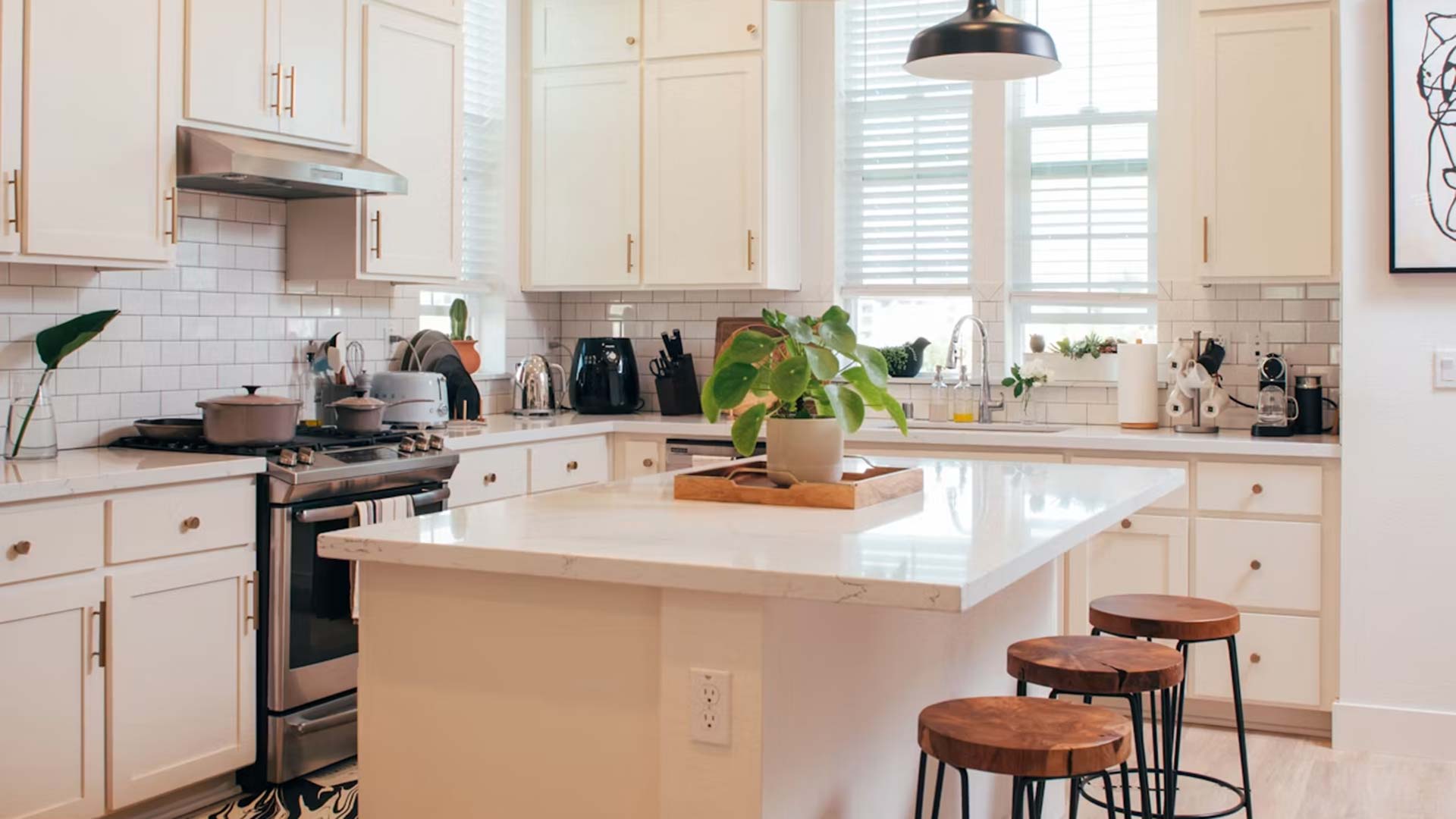
A busy family kitchen with young children is not a marble brief. Wine, citrus, food colouring, dropped pans — the surface will take real punishment daily, and clients rarely want a maintenance conversation every six weeks. A well-selected quartz gives them the look they want without the anxiety.
2. Wet rooms and spa interiors
Full-bleed porcelain walls and floors give designers a near-seamless surface that natural stone cannot match at that scale. They also handle the constant moisture without the maintenance overhead of a sealed limestone or travertine.
3. Commercial and hospitality
Reception counters, bar tops, hotel bathrooms — anywhere the surface is under continuous public use, engineered stone offers a level of consistency and predictability that specification teams need. The client is signing off on a repeatable product, not a variable natural one.
4. UV-exposed outdoor work
Certain porcelains are UV-stable to a degree that natural stones sitting on a terrace are not. If the design brief includes a bar or worktop that will live outdoors and needs to look the same in ten years, this matters.
The design conversation
The trap in engineered stone specification is treating it as a discount marble. It is not — it is a different material with its own visual grammar. The best quartz slabs read as considered when they are chosen for their own colour and movement, not when they are trying to fake something they are not.
When we specify engineered stone, we choose it the same way we choose natural stone — for the room, for the light, for the use. That is what makes it feel like a proper specification decision rather than a compromise.
Notes from the workshop
Bookmatching, and when it earns its place
The mirror-image detail every marble client asks about. When it is worth the cost and complexity — and when a single, honest slab does the same job for a fraction of the fee.
Specifying marble that lasts
How we help clients choose a marble that carries a room for decades — from block selection to the finish specified on the day of install.